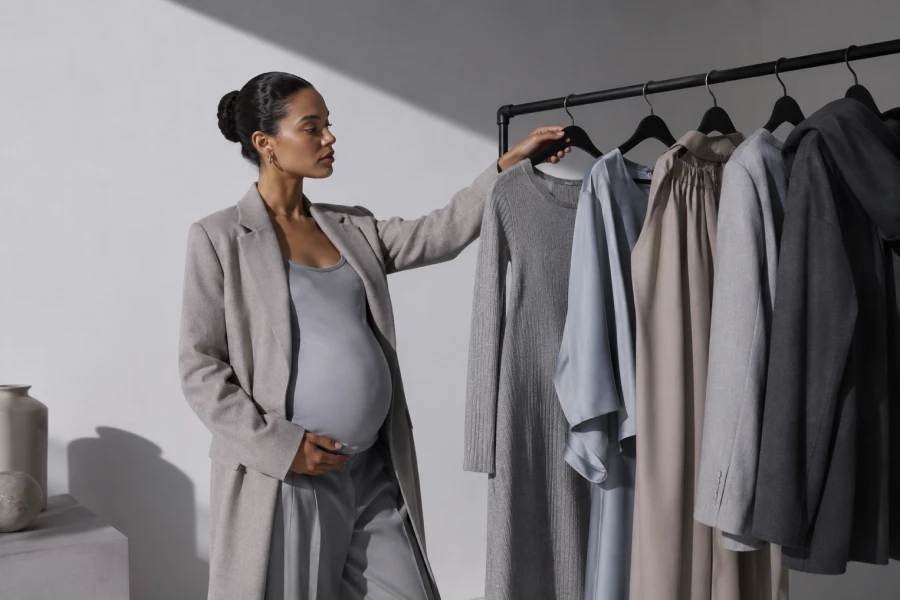
Maternity outfit planning changes getting dressed from a daily negotiation into a familiar, flexible routine. Your clothes should support real appointments, workdays, walks, and slower afternoons. That does not require an entirely new identity or an overflowing closet. Instead, it begins with noticing what already feels good on your body. Each trimester introduces fresh preferences, but not every preference requires a purchase. A few reliable silhouettes can carry far more of the week than trend-led pieces. Comfort matters, yet it can coexist with color, polish, and personality. Planning early also stops last-minute shopping from becoming the default solution. That breathing room makes outfit choices feel calmer when energy runs low. The goal is not perfection; it is an easier way to feel like yourself.
Before adding anything to cart, take inventory of what your current wardrobe still offers. Soft knits, open shirts, elastic-waist layers, and longer jackets often have more mileage than expected. A short note on fit helps reveal which pieces need support and which only need styling. Use those observations to define your maternity wardrobe essentials around everyday needs. That category may include breathable bases, adaptable bottoms, and one dependable outer layer. Then consider which routines call for a more structured look. Office days, weekend plans, and celebrations rarely demand the same wardrobe solution. Knowing the difference keeps the selection focused rather than overly cautious. Purchase gaps should solve a specific problem instead of creating a new one. With that approach, every addition earns a place in the rotation.
Changing proportions deserve responsive styling, not rules that make you feel restricted. Choose fabrics with movement, waistlines that adapt, and layers that can open or close easily. Length also matters because a longer top or jacket can create visual balance without hiding you. Simple contrast works well when one piece skims and another piece drapes. Build a few pregnancy outfit formulas so mornings do not start from zero. One formula might pair leggings, a fine knit, and a soft overshirt. Another might use a stretch dress, boots, and an unstructured blazer. Repeating a formula is not boring when colors, textures, and accessories shift. Your wardrobe becomes easier to use because each item has clear partners. That clarity leaves more attention for the moments that matter beyond the mirror.
A useful wardrobe follows the shape of your real month rather than an imagined ideal schedule. Look at recurring events before deciding what to buy or keep accessible. Perhaps you need polished layers for meetings, easy separates for errands, and softer looks for home. A clear calendar makes comfortable maternity style easier to define. It also reveals where a single versatile piece could solve several needs. A roomy button-front shirt might work over a tank, beneath knitwear, or open over a dress. Low-heel footwear can make a similar difference across multiple outfit types. Fewer special-purpose items means less pressure to create new looks constantly. The closet begins to feel useful because it reflects your life. That is a much stronger foundation than shopping according to vague inspiration alone.
It helps to think in short cycles instead of trying to predict every need months ahead. Review what worked at the end of each week and notice what felt inconvenient. Maybe a neckline became uncomfortable, a waistband lost flexibility, or a layer suddenly felt too warm. Those observations create a personal trimester outfit strategy that responds to real changes. Keep the useful pieces in easy reach and move the less helpful ones elsewhere. This gentle editing process prevents an overcrowded closet from becoming visually exhausting. It also lets you shop in smaller, more intentional moments. Your next purchase becomes a direct answer to a known need. That approach supports both flexibility and confidence. A wardrobe can evolve without feeling like a project that never ends.
Practical clothing does not need to erase the parts of style that make you recognizable. Jewelry, a favorite bag, a patterned scarf, or a thoughtful shoe choice can shift the whole feeling. Small finishing choices create continuity when your usual silhouettes change. They also help repeat outfits feel fresh without adding more clothing. Let color do some of the work when comfort pieces start to feel too familiar. A tonal look may feel calm and polished, while a bright accent can lift a simple base. The best details match your energy rather than competing for attention. Keep a small group of favorites where you can see them. That makes finishing an outfit faster on busy mornings. Style often feels strongest when it comes from choices you already enjoy making.
The most successful wardrobe systems make space for changing moods and changing energy. Create a small rail, shelf, or section for pieces that currently fit well. Keep easy combinations together so you can dress without a long search. Photograph a few outfits you genuinely liked for future reference. Those images become useful on mornings when decision fatigue appears early. A repeatable system also makes packing for short trips much easier. You will know which layers travel well and which outfits need fewer adjustments. Confidence grows when getting dressed stops consuming unnecessary mental space. Your clothes become a quiet form of support instead of another task. That is the lasting value of planning with care.




Leave a comment