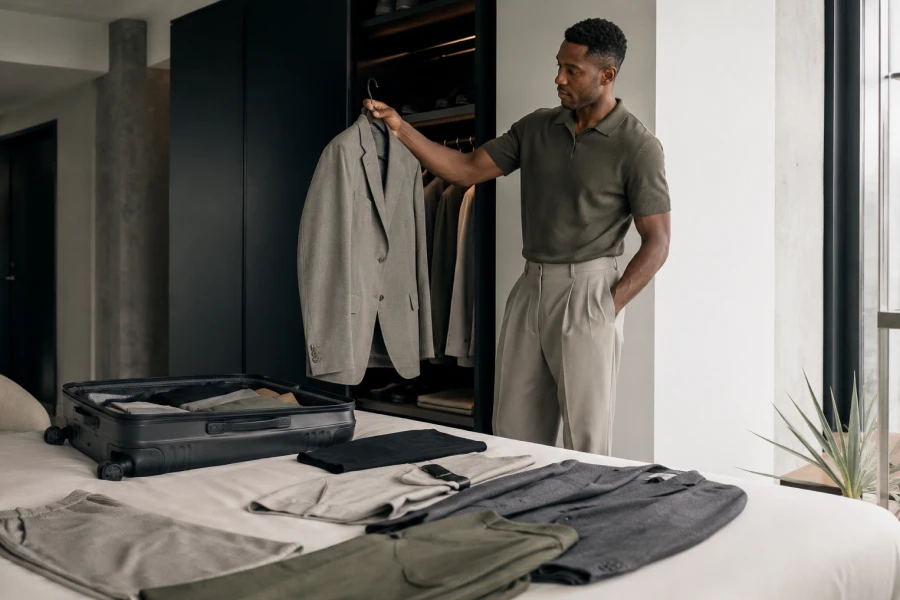
Long trip packing strategy becomes essential when a journey lasts long enough for small wardrobe frustrations to become real annoyances. A suitcase that feels manageable on day one can become exhausting when it contains too many difficult combinations. The answer is not to pack more clothing. It is to pack with a clearer sense of purpose. Each item should support several outfits, suit the destination, and feel good after a full day. The most useful travel wardrobes are built around repetition that still feels fresh. That requires attention to fabric, fit, color, and daily routine. A well-designed plan protects your energy before you ever leave home. It also makes unpacking, repacking, and getting dressed much easier. The goal is to arrive with enough options, not every option you own.
A travel uniform is not a strict formula or an outfit worn exactly the same way every day. It is a dependable combination of shapes that you know works for your body and routine. Perhaps you prefer relaxed trousers, fitted knitwear, and an open layer. Maybe dresses, sneakers, and a light jacket make you feel most comfortable. Identify the elements that repeatedly appear in your best outfits. Those recurring choices form the core of your travel wardrobe planning. Once you understand the silhouette, you can choose several interchangeable versions without overpacking. This helps avoid bringing clothes that look appealing but do not fit your actual habits. A travel uniform makes daily dressing smoother because you already know the combinations work. It provides consistency while leaving room for different colors, layers, and accessories.
One-time pieces often take up space because they feel exciting during the packing process. They promise a special outfit, a different mood, or a version of yourself you may become on vacation. Before adding one, ask whether it works with at least two or three other pieces. Consider whether you would still choose it after a full day of walking or a sudden weather change. This is where a carry-on travel capsule can create useful discipline. Space becomes limited enough that every item must justify its role. That constraint often improves the final selection. You choose clothing that supports the trip rather than clothing that needs its own special conditions. The result is a smaller suitcase with more outfit potential. That is a much better trade than carrying several pieces you never reach for.
Color can either simplify travel dressing or make every outfit feel like a puzzle. Start by choosing two or three foundation colors that work together naturally. Add one or two accents that make the wardrobe feel personal and less uniform. You do not need every garment to match exactly. You only need enough overlap that tops, bottoms, layers, and shoes can move between outfits. A coordinated color story reduces the chance that one piece becomes isolated in the suitcase. It also allows you to create a more polished look with less effort. Consider the colors you already wear most often at home. They usually make the strongest travel choices because they already feel familiar. A successful palette should help you pack quickly and dress confidently.
Repeat wear becomes easier when you plan combinations before the trip rather than improvising after arrival. Lay out the clothing together and create a few core looks for different types of days. Make sure every top can work with more than one bottom. Check whether your outer layers fit over the pieces beneath them. This is where packing outfit formulas can prevent wasted space and decision fatigue. A simple formula might combine trousers, a breathable top, and one layer for most daytime plans. Another may use a dress, flat shoe, and jacket for dinners or more polished situations. The clothing remains familiar, but the finishing pieces create different moods. Repeat wear stops feeling repetitive because each item has several possible partners. That preparation is especially useful when mornings are busy or jet lag makes choices harder.
A suitcase should not be packed so tightly that there is no room for small changes along the way. You may buy something locally, need a weather-related layer, or simply want more space after laundry. Leave a little physical room and a little mental room in your plan. This makes the wardrobe feel flexible rather than fragile. A long trip often brings unexpected invitations, delays, or changes in pace. Your clothes should be able to accommodate those shifts. Focus on items that work in several environments and can be dressed up or down. The more adaptable the suitcase, the less stressful those changes feel. Packing lightly is not about proving discipline. It is about creating more freedom once you are there.
A strong packing system removes friction from every stage of a longer journey. It makes transit days easier because the bag is lighter and more organized. It makes hotel rooms calmer because there is less clutter to manage. It makes getting dressed faster because the combinations already make sense. You can focus on the place, the people, and the experiences instead of the contents of your suitcase. A few dependable pieces will almost always serve you better than a crowded selection of uncertain options. Build around comfort, compatibility, and the kind of travel you actually enjoy. That approach makes your suitcase feel like a support system. It travels with you quietly and makes room for everything else.

Leave a comment