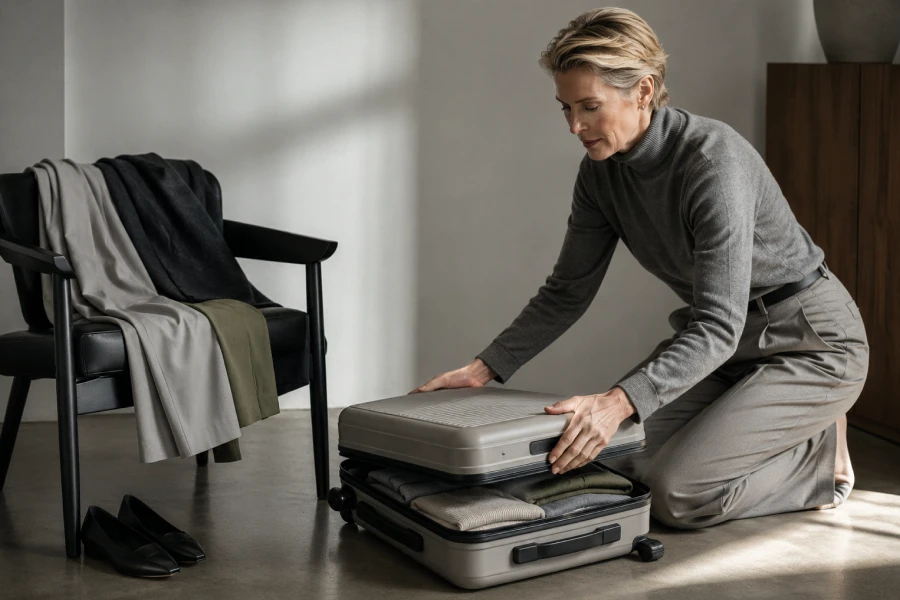
Minimalist packing for extended travel does not mean sacrificing comfort, personality, or choice. It means deciding what deserves space in a suitcase that must work for weeks rather than days. The best approach begins with honest priorities instead of a fear of being unprepared. Most travelers need fewer backups than they imagine and more reliable combinations than they pack. A thoughtful suitcase can handle travel days, restaurants, errands, work, and downtime without becoming difficult to carry. The key is to choose items that support more than one setting. You also need enough flexibility for weather and changing plans. That balance comes from planning, not from adding more clothing. A lighter bag can make airports, stairs, small rooms, and frequent moves much easier. Minimalism works when it creates freedom instead of limitation.
Start with clothing that has already earned your trust at home. These are the pieces you wear often because they fit well, feel comfortable, and work with other items. A longer trip is not the best time to test garments that constantly need adjusting. Build your suitcase around familiar favorites before adding anything new. This is especially useful for creating a long stay packing list that feels realistic rather than aspirational. Think about what you would wear through a full ordinary week, then adapt it to your destination. You may need a more practical shoe, a weather layer, or one polished option. The core should still feel like you. Familiar clothes reduce decision fatigue because you already know how they behave. That confidence is worth far more than another untested item.
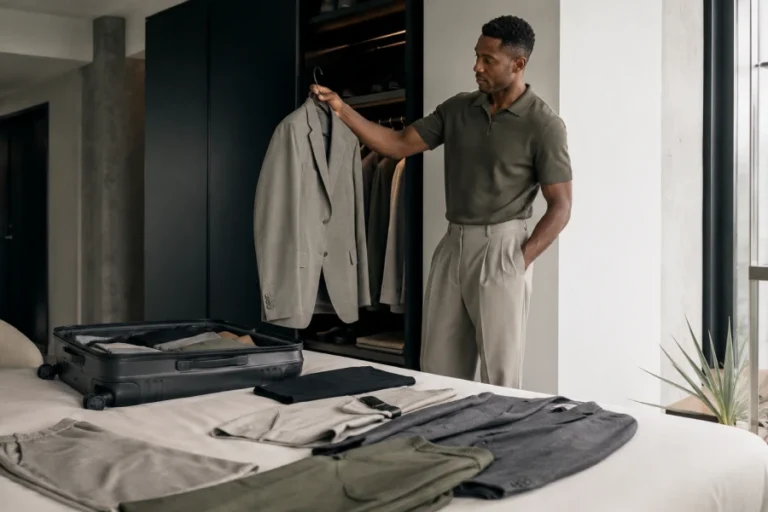
A compact suitcase becomes more useful when every top, bottom, layer, and shoe has several partners. Before packing, place the pieces together and make sure they create enough combinations. Notice whether one color, fabric, or shape refuses to work with the rest. That item may be beautiful, but it could be taking up valuable space. Outfit planning for travel helps you see connections before you are living out of a suitcase. Build a few daytime combinations, a few polished options, and layers that work across both. Small accessories can change the mood without adding much weight. The goal is not to make every outfit completely different. It is to make every item useful in more than one outfit. That logic is what turns a smaller wardrobe into a flexible one.
It is easy to pack for a version of the trip that includes every possible event, weather condition, and mood. That version usually creates an overstuffed bag full of pieces you never touch. Focus first on the activities that are actually on your itinerary. Then add one or two flexible options for the unexpected. This gives you preparation without turning every unknown into a packing category. A lightweight shell may solve more problems than several bulky layers. A polished shoe may cover more situations than three delicate pairs. Ask whether an item supports a likely day or an unlikely fantasy. That question can be surprisingly clarifying. Packing becomes lighter when you stop trying to predict every detail. You can always adapt with layers, laundry, and local discoveries.
Laundry is not an inconvenience that ruins a minimalist suitcase. It is what allows a smaller wardrobe to remain useful for a longer period. Plan a simple rhythm around washing the items that see the most wear. Choose fabrics that dry reasonably quickly and can be reworn comfortably. This creates a stress free suitcase strategy because you no longer need a separate outfit for every day. A few dependable pieces can move through the trip several times with different combinations. Keep a small laundry kit if that makes the routine easier. Consider drying time before packing heavy or slow-drying fabrics. This practical step can reduce the amount you carry significantly. It also helps you focus on clothing that is genuinely worth repeated wear. Laundry gives a compact wardrobe more range than extra baggage ever could.
Minimal packing does not mean every outfit has to feel identical. Accessories can change the tone of familiar clothes without taking much room. A scarf, necklace, belt, watch, or different shoe can make a repeated combination feel refreshed. Keep these details connected to the colors and proportions in the core wardrobe. That way they add range rather than creating another difficult styling problem. A small bag or pouch can also help keep finishing pieces organized. Choose the accessories that you naturally use rather than items saved for an imaginary occasion. The best details can move easily from daytime walks to dinner plans. They allow you to keep clothing choices simple while still expressing personality. A good finishing piece can make even a very small wardrobe feel more complete.
A lighter suitcase changes the experience of traveling in ways that are easy to underestimate. You move through transit more comfortably and make fewer decisions in small hotel rooms. Repacking becomes faster because every item has a designated role. Getting dressed also becomes easier because the combinations are already familiar. You may discover that carrying less makes the trip feel more open and less controlled by logistics. A smaller wardrobe still gives you plenty of options when those options are thoughtfully connected. It lets you focus on the places you visit rather than the bag you have to manage. That is the real benefit of a minimalist approach. Every item earns its space, and you gain more space for the journey itself.

Leave a comment